
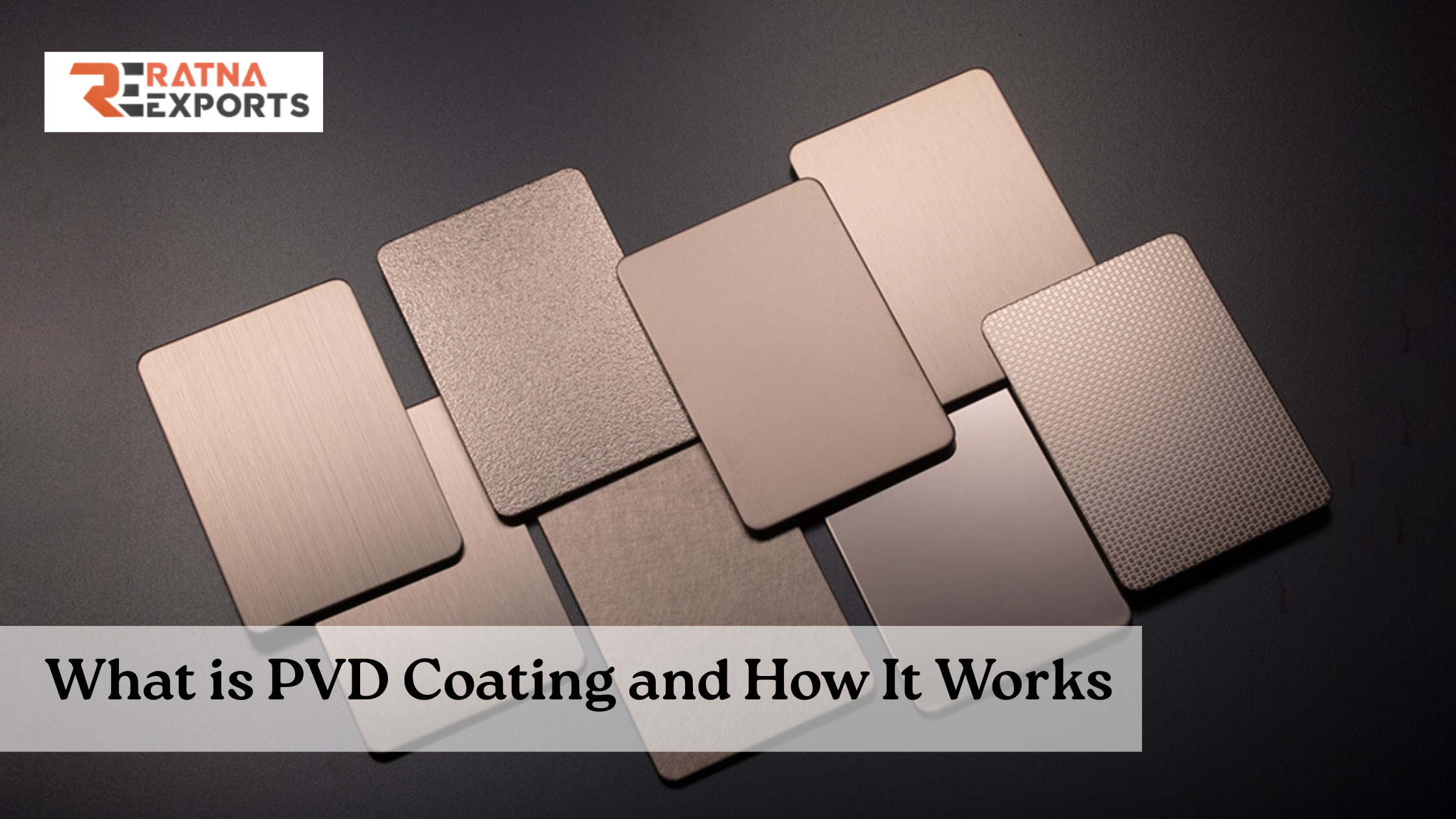
PVD coating stands for Physical Vapor Deposition coating. It is a surface treatment technique used to enhance materials’ hardness, resilience to wear and aesthetics. This coating creates a thin layer on the surface, providing protection and a polished, appealing appearance.
The main goal of PVD coating is to make surfaces tougher, resist corrosion and reduce wear from everyday use. It also gives a stylish, glossy, or matte look, depending on the type of finish used. This makes it useful in both industrial tools and decorative parts.
The Basics of PVD Coating Technology
Solid coating materials are converted into vapor by the PVD process which subsequently deposits the vapor onto a surface. In a vacuum chamber it takes place. The result is a thin, even and strong coating layer.
PVD operates at lower temperatures and produces no hazardous waste in contrast to other techniques like Chemical Vapor Deposition (CVD) or electroplating. It also makes thinner, more uniform layers that bond well with the base surface.
Common materials used in PVD coatings include:
- Titanium Nitride (TiN) – golden finish, high hardness
- Chromium Nitride (CrN) – silver color, good wear resistance
- Zirconium Nitride (ZrN) – decorative, corrosion resistant
These coatings are chosen based on the need, whether it’s for protection, performance or appearance.
How Does the PVD Process Work?
The PVD coating process involves several controlled steps, each done inside a vacuum system. Here’s how it works:
Substrate Preparation (Cleaning): The surface to be coated is first cleaned to remove dirt, oil, or oxidation. This is done using ultrasonic washing, degreasing, or plasma cleaning to ensure strong bonding of the coating.
Vaporization in Vacuum Chamber: A vacuum chamber is used to hold the coating material, such as titanium. High temperatures or electrical energy are used to turn the material into vapor.
Deposition of Thin Film: The vapor spreads inside the chamber and lands on the clean surface of the part. It forms a solid coating layer. This layer is usually only a few microns thick but very strong.
Cooling and Finishing: The component is cooled and taken out of the chamber after coating. Final touches may be applied such as coloring, polishing, or visual inspections.
Typical machines used in this process include vacuum chambers, magnetrons, and arc sources.
Advantages of PVD Coating
PVD coatings are known for their wide range of benefits:
- High Hardness and Scratch Resistance: PVD coatings increase the base material’s surface hardness. This helps protect it from scratches, knocks, and normal wear.
- Environmentally Friendly: The process produces no harmful waste or chemicals. It is clean and safe, especially compared to electroplating or other chemical-based coatings.
- Thin, Uniform, and Durable Coating: The coatings are very thin but highly consistent. They bond tightly with the base and last longer than traditional paint or plating.
- Variety of Colors and Finishes: PVD provides a wide range of aesthetic choices, including rose, silver, bronze, black and gold. Depending on the situation it might be matte or shiny.
Our PVD Coated Sheet utilizes these benefits to deliver durable, corrosion resistant surfaces ideal for architectural and industrial applications.
Applications of PVD Coating
PVD coatings are used across several industries where surface protection and style are important:
Automotive: It is used on trim parts, wheels, and engine parts for both looks and performance.
Medical Devices: PVD is applied to surgical tools and implants because it’s clean and biocompatible.
Electronics: Used on phone parts, circuit boards, and casings for better protection and reduced wear.
Watches and Jewelry: Offers a durable, shiny finish that resists scratching and fading over time.
Cutting Tools: Tools like drills and cutters are coated to last longer and perform better under stress.
PVD coatings are commonly applied to metal sheets for enhanced protection and appearance. Our PVD Coated Sheet is specially engineered to meet the demands of modern construction and manufacturing.
Limitations and Considerations
While PVD offers many advantages, it’s not always the best fit for every use:
- Higher Upfront Cost: The equipment needed is expensive and may not be suitable for small-scale operations.
- Limited Use on Complex Shapes: It may be hard to coat deep holes or inner parts evenly due to the line-of-sight nature of the process.
- Clean Surface Required: The surface must be properly cleaned before coating. Any dirt or oil can lead to poor results.
PVD vs Other Coating Technologies
Here is a short comparison to help understand how PVD stacks up against other methods:
CVD (Chemical Vapor Deposition): produces thicker layers and operates at greater temperatures. Not appropriate for materials that are sensitive to temperature, but better for parts that can withstand heat.
Electroplating: Uses liquid chemicals and electricity. Affordable but may produce hazardous waste and less durable coatings.
Anodizing: Works well for aluminum but doesn’t give the same hardness or variety in finishes as PVD.
PVD provides a good mix of safety, performance, and aesthetics. It is perfect for applications requiring fine finish and excellent durability.
Maintenance and Durability of PVD Coatings
PVD coatings last a long time if cared for properly. They resist scratches, corrosion, and fading.
Cleaning is simple, just use a soft cloth with mild soap and water. Avoid abrasive cleaners or pads.
Depending on usage, recoating may be necessary after years, depending on usage, particularly in high-friction areas like tools or machine parts.
Conclusion
PVD coating is a modern surface treatment that combines strength, durability, and beauty. It is used widely across industries to make surfaces last longer and look better. From decorative panels to high-stress machine parts, it serves both form and function.
Looking for durable, corrosion-resistant metal surfaces? Explore our PVD Coated Sheets to bring advanced PVD technology to your projects.


